Showing posts with label environment. Show all posts

Thursday, June 27, 2013

Ecuador more Democratic than USA


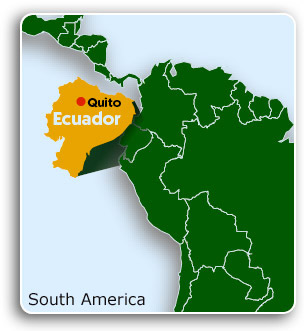
Ecuador's capital city has built a sustainable, eco-friendly city that puts most USA cities to shame:
Most taxis and many of the buses in Quito are operated by cooperatives, part of the booming solidarity sector made up of tens of thousands of community banks and credit unions and worker owned enterprises in the manufacturing, housing, agriculture and transport industries. It's important to note that this sector has grown along side, rather than instead of the traditional private and public sectors which have also seen healthy expansion.
People often ride the shared bikes provided by the city, use of which is available for a tiny yearly fee. Every Sunday a north south route through the city, including Avenue Amazonas, one of the city's main arteries, is given over entirely to cyclists and pedestrians, who come out in the thousands. The old airport, having been engulfed by urban expansion and replaced earlier this year, has also been turned over to the public as a park, and is already in use. 
Of course, everything is not perfect outside the city (violence, crime and poverty abound), but Ecuador is still moving in the right direction, expanding opportunities and safe, healthy, affordable living spaces for it's citizens rather than crying "austerity! cut everything!" like most "first world" democracies today:
Almost all this progress has occurred under the leadership of President Rafael Correa, a former economics professor who was made finance minister in 2005 during one of Ecuador's recurrent economic crises, running for the presidency the following year, assuming the office in 2007, and quickly bringing an era of unprecedented stability and prosperity. By the end of of 2012, unemployment had fallen to 4.1 percent, its lowest level on record and the poverty rate to 27.3 percent - that's 27 percent below what it was when Correa took power.
So, USA, care to take some notes?

Thursday, August 4, 2011

Texas: Now Unquestionably the Reddest State Ever

When I wrote about Hell-On-Earth heatwave disasters last week, I thought I was being clever. Now there's an actual RIVER OF BLOOD in Texas, and I'm afraid that we'll see a plague of locusts next. Seriously, what the frick? I don't believe in the Bible but when The Weather Channel starts sounding like the the End of Days, you have to take note.

This Red River is not actual blood, but a bacterial sludge fed by dead fish and oil runoff pollution. Intense drought and heat lowered the San Angelo water so much that it became stagnant, unable to move. While the water evaporated, the pollution stayed behind, and the remaining muck was too toxic to support the fish. As they all died, their rotting corpses robbed the water of oxygen, which made it a perfect environment for the Rosy-faced Chromatiaceae bacteria.

So, although not actual blood, the San Angelo Reservoir is looking pretty scary. The worst part? These Red Rivers lead to a Red Lake, which actually provides DRINKING water for San Angelo and its surrounding communities in Tom Green County. I haven't heard of anyone turning on their tap and screaming bloody murder, so the drought must have kept this reservoir from reaching the pipelines. SO FAR. God only knows what will happen the next time a rainstorm hits Texas.

Monday, October 11, 2010

Trees, Now With the Power of GMO!


Are you a fan of trees? Then you'll love these new super-trees being developed at Berkeley and Oak Ridge National Laboratories.

Called the "organic enemy" of global warming, these new trees act like mini carbon vaults, sucking up huge amounts of carbon from the air and then sending it down to the soil, never to see the light of day again. So, if carbon is the criminal causing global warming, these super-trees are the global policemen who will catch and imprison that carbon, thereby allowing humans to frolic freely and burn as much fossil fuels as we want!

Meanwhile, the soil under these GMO trees will become filled with carbon, which will stay there "for centuries." A small amount of carbon is already naturally present in soil, and is good for plant growth. Could too much carbon in the soil become toxic? No one knows yet, but if that happens we can just invent a super Potato-Bug to eat up all the carbon in the soil!

Tuesday, June 29, 2010

California: Killing the Environment to Save Jobs

Californians, get ready to vote this November! Your ballots will now include the California Jobs Initiative. With unemployment rates at a frightening 12%, who wouldn't vote for such a heroically named law?

Now, while this law may not directly create any jobs, it does do the important duty of repealing global warming law AB32, which caused "higher utility rates and fuel prices," and paid subsidies to over 300 renewable energy companies. Lowering prices on fossil fuels and killing off that unproductive upstart industry of clean energy is clearly the best way to deal with an economic crisis. That must be why the guardians of public good, oil companies, covered 78% of the $3 million it took to get this law on the ballot.

Yes, the oil companies are going to protect YOU from that pesky environmental law that's making energy "so expensive." I mean, California oil companies can't help that oil comes with all these extra costs, like cleaning up the COSCO Busan spill in 2007 or the billion dollar BP mess of today. We just need to remove taxes on oil for a little while to let everyone get back on their feet! The California Jobs Initiative won't remove environmental standards forever, just until the state's unemployment rate drops below 5.5% for a full year. Sure that would require some of the lowest unemployment rates in California history, but with big oil protecting your jobs I'm sure we can all expect a new golden age to hit the state soon.


Saturday, June 5, 2010

Wildlife Holocaust

Since the disastrous oil spill, BP has been working to keep journalists away from the Gulf Coast. Looking at these pictures, you don't have to wonder why:
These were taken along the Gulf Coast by AP photographer Charles Riede. I can't make any sort of joke about this, so I'll include the words of a commentator who said it best, Karen S :
With photos like this we get a glimpse of the amount of suffering, but what is taking place out of sight is truly a wildlife holocaust. We won’t know the scope of it for years. The Gulf will be a silent ocean for who knows how long, because it’s dying. If BP doesn’t stop the leak soon the health of the North Atlantic will also be at risk.
Unfortunately there are no plans to stop it soon. The leak is still going and BP has said the flow is too strong to plug it. Their new plan is to drill more wells to relieve the pressure and pull away the oil from the leak. These two "relief wells" are due to be completed in August.

So I guess we have two more months of oil-covered corpses coating the shores...how is this an acceptable plan?